The headlines over the past few days would have you believe that UK aviation is on the brink of a summer meltdown. Fuel shortages, spiralling prices, grounded aircraft, and airlines supposedly flying halfway across Europe just to fill their tanks before returning home. It’s a compelling narrative, but like most things in aviation, the reality is far more measured and, in some respects, quietly well managed.
Yes, there is a genuine backdrop here. The disruption to global fuel supply routes has pushed jet fuel prices sharply higher and created uncertainty about availability later in the summer. Airlines are responding in predictable ways: trimming less profitable routes, consolidating schedules, and in some cases introducing fuel surcharges to protect margins. None of that is especially dramatic; it’s how a rational, capital-intensive industry behaves when a major input cost becomes volatile.
What’s striking, however, is how limited the disruption in the UK has been so far. Airlines have been clear: there is no current shortage of jet fuel in the UK, thanks to forward purchasing and existing stockpiles. Even as prices rise, operations remain broadly stable, with carriers such as EasyJet already announcing a no-surcharge promise and continuing to fly full schedules while cautiously adjusting forward capacity.
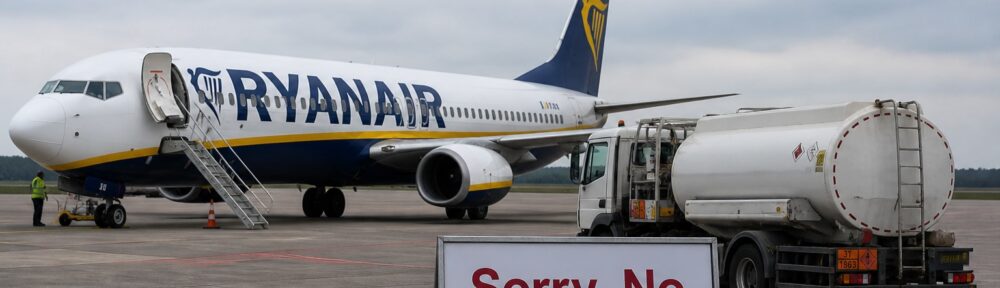
That nuance hasn’t stopped some in the industry from talking up the risk. Ryanair, in particular, has been characteristically vocal, warning of potential cancellations, higher costs, and summer disruption if the situation persists. This is entirely consistent with its long-standing communications playbook. The airline has built a reputation for provocative, attention-grabbing messaging, often designed to hint that consumers are safe to book with them but not their competitors.
The problem is that this kind of rhetoric risks overstating the immediacy of the issue. Even Ryanair’s own leadership has acknowledged that the risk of a near-term shortage appears to be receding, with suppliers indicating no disruption through early summer. At the same time, the airline is quietly adjusting fares downward to stimulate demand, hardly the action of a business bracing for imminent capacity collapse.
Contrast that with the more measured tone from other UK carriers. Airlines like easyJet and Jet2 have gone out of their way to reassure customers, committing not to introduce fuel surcharges and maintaining planned operations despite cost pressures. It’s a notably more customer-centric response, and arguably a more accurate reflection of the current operating environment: challenging, yes, but far from crisis.
Where there is genuine change is in how airlines are planning for the months ahead. If fuel remains expensive or constrained, we are likely to see more consolidation, fewer frequencies on marginal routes, more focus on core, high-demand destinations, and a continued shift toward operating larger, fuller aircraft. This is not a sign of weakness; it’s a sign of discipline. Airlines have spent decades learning that flying half-empty planes to preserve schedules is a fast route to financial trouble.
This is precisely where the UK government deserves some credit. The decision to relax slot utilization rules, effectively suspending the “use it or lose it” requirement at congested airports, has given airlines the flexibility to make sensible operational choices. Instead of running flights purely to protect historic rights, carriers can now consolidate schedules without penalty, reducing unnecessary fuel burn and focusing capacity where it’s actually needed.
It’s a pragmatic intervention that echoes the approach taken during the pandemic, and it recognises a simple truth: resilience in aviation doesn’t come from rigid rules, but from giving operators room to adapt. In a scenario where fuel supply could tighten, allowing airlines to reduce flying in a controlled way is far preferable to forcing inefficient operations or triggering last-minute cancellations.
There are, of course, second-order effects. Some long-haul routes may become less viable, particularly those to regions with more constrained fuel supplies. Airlines may engage in more “Tankering”, uplifting extra fuel at airports where it is more available or cheaper, to mitigate risk. And yes, ticket prices are likely to edge up as fuel costs feed through into fares. But these are incremental adjustments, not systemic shocks.
The bigger picture is that the industry is behaving exactly as it should: cautiously, pragmatically, and with a clear focus on maintaining operational continuity. The idea that planes will be routinely flying abroad just to refuel or that UK airports are about to run dry makes for a dramatic headline, but it doesn’t align with the evidence on the ground.
If anything, this episode is a useful reminder of how far the sector has come. Between hedging strategies, diversified supply chains, and closer coordination with the government, airlines are far better equipped to handle external shocks than they were a decade ago. The system is not immune to disruption, but it is resilient.
And that’s the story that perhaps deserves more attention. Not the noise, not the posturing, but the quiet, competent management of a complex global challenge.
Well done, Easyjet and Jet2, but please shut up, Ryanair. We are bored with your bullying and bullshit headlines.